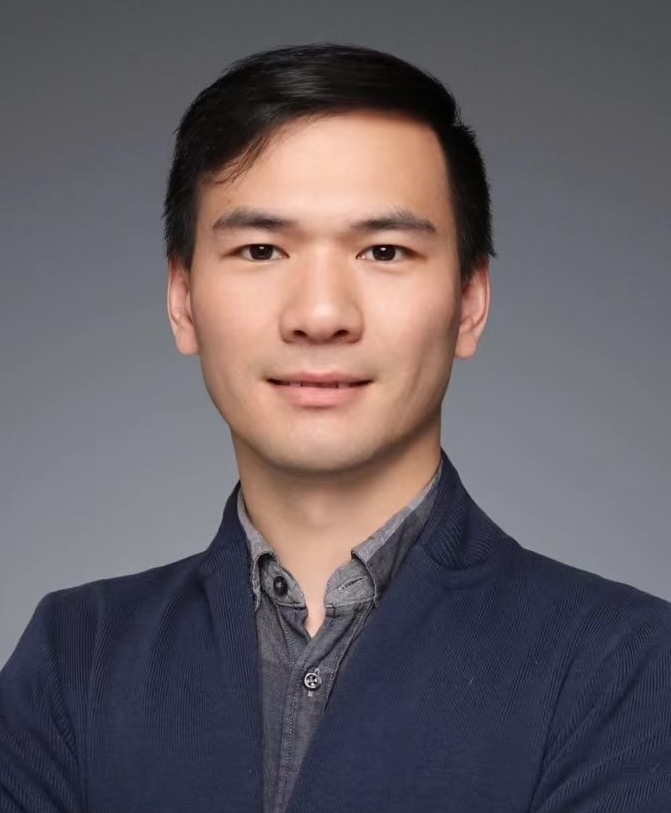
Hao WANG
About
Dr. Hao Wang served as a Lecturer in the Department of Intelligence Science and Technology at Shanghai University from 2019 to 2024, and has been an Associate Professor since 2024. Since 2025, he has been seconded to the Putuo District Data Bureau in Shanghai, serving as Deputy Director of the Administrative Approval Center and Deputy Director of the Urban Operations Center. He received a doctoral fellowship from the China Scholarship Council and earned his M.Sc. (2014) and Ph.D. (2019) from Waseda University, Japan. He has worked at Microsoft Research Asia, Toshiba Global R&D, and NTT Communication Science Laboratories. He has published more than 50 papers in international conferences and journals, including ACL, COLING, EMNLP, IJCAI, and CSCW. More than 40 of these papers have appeared in SCI/SSCI/A&HCI-indexed venues or CCF-recommended conferences. He has led a completed Shanghai Municipal Science and Technology Commission Sailing Program project, an NSFC Young Scientists Fund project at the AI interdisciplinary interface, and five industry collaboration projects. As a key member, he has also contributed to several NSFC major and general projects, the National Key R&D Program, and special projects on social governance. His research interests include artificial intelligence, human–AI collaborative cognition, and natural language processing, with applications in medical and other high-stakes documents.
We welcome students with backgrounds in NLP, as well as students from linguistics, cognitive science, psychology, and related fields. International students are also welcome. Please note that Shanghai University currently offers Chinese-taught programs only, so international applicants are expected to hold an HSK Level 5 certificate.
Professional Service
- Editorial Board
- Adjunct Teaching
Part-time Instructor, Language Data Science Micro-program, School of Foreign Languages, Shanghai Jiao Tong University.
- Conference Service
Long-term area chair (AC), program committee member (PC), or reviewer for ICLR, ICML, NeurIPS, ACL, EMNLP, AAAI, and other international conferences.
- Journal Reviewing
Reviewer for TKDD, TNNLS, NLE, and other journals.
Honors & Awards
Courses
- AI and Brain Cognition (Spring 2025)
- Data Mining and Knowledge Processing (Spring 2025)
Research
Open positions: 2–3. If you are interested, please contact us .
- Human-AI Co-Cognition
Explore the boundaries of interaction between the human brain and large language models, focusing on deep reasoning and medical/legal document understanding.
Note: Priority is given to applicants for academic master's programs. Female students are encouraged to bring their nuanced and perceptive strengths to interdisciplinary AI research.
- AI-Native Society & Governance
Study multi-agent collaboration mechanisms and infrastructure in complex organizations, drawing on urban governance, administrative approvals, and logistics automation.
- Embodied AI & Brain-Computer Interface
Use EEG and other physiological signals to explore next-generation embodied control and AI UI design, enabling machines to understand human intent more naturally.
Insights
Write hardcore code.
Build AI with human warmth.
Graduate Students
| Name | Entry Year | Undergraduate Institution | Note | Research |
|---|---|---|---|---|
| Tu Yuyun | 2026 | Jiangxi Normal University | Recommended | AI-Native Infrastructure |
| Zhang Dang | 2026 | Zhejiang Chinese Medical University | Recommended | Medical Deep Reasoning |
| Wu Yueying | 2026 | Wuhan University of Science and Technology | Recommended | Human–AI Collaborative Control Theory |
| Liu Ruibin | 2025 | Southwest University | EEG-driven Embodied Control | |
| Huiwen Xiong | 2025 | Anhui University of Finance and Economics | Recommended | EEG + LLM UI Design |
| Feng Xue | 2025 | Suzhou Lexing Information Technology Co., Ltd. | Part-time | AI4INDUSTRTY |
| Zhang Qingya | 2025 | Digital China Information Service Group Co., Ltd. | Part-time | AI4AUTO-OPS |
| IDLKAID MOHAMMED | 2024 | Sidi Mohamed Ben Abdellah University | International Student, Morocco | Risk Assessment of LLM-based Legal Translation |
| Yang Qi | 2024 | Dongguan University of Technology | Multi-Document Understanding |
Alumni
| Name | Year | Undergraduate Institution | Destination | Thesis | Note |
|---|---|---|---|---|---|
| Liu Maolin | 2026 | Shanghai University | Trip.com Group, Shanghai | Master's Thesis | SHU undergraduate |
| Chen Bin | 2025 | Shanghai University | COMAC, Shanghai | Master's Thesis | Recommended |
| Wang Changqing | 2025 | China University of Petroleum | Meituan, Shanghai | Master's Thesis | |
| Wang Qingxuan | 2025 | Northeast Petroleum University | China Telecom, Zhengzhou | Master's Thesis | Recommended |
| Li Tang | 2024 | Taiyuan University of Technology | China Telecom, Shanghai | Master's Thesis | |
| Chen Xiahua | 2024 | Nantong University | Zhongan Tech, Shanghai | Master's Thesis | |
| Zhang Junwei | 2023 | Zhengzhou University of Light Industry | China Unicom, Shanghai | Master's Thesis | Transferred in Year 2 |
| Tao Xi | 2023 | Shanghai University | ByteDance, Shenzhen | Master's Thesis | |
| Du Siyuan | 2022 | Shanghai University of Engineering Science | SAP, Shanghai | Master's Thesis |